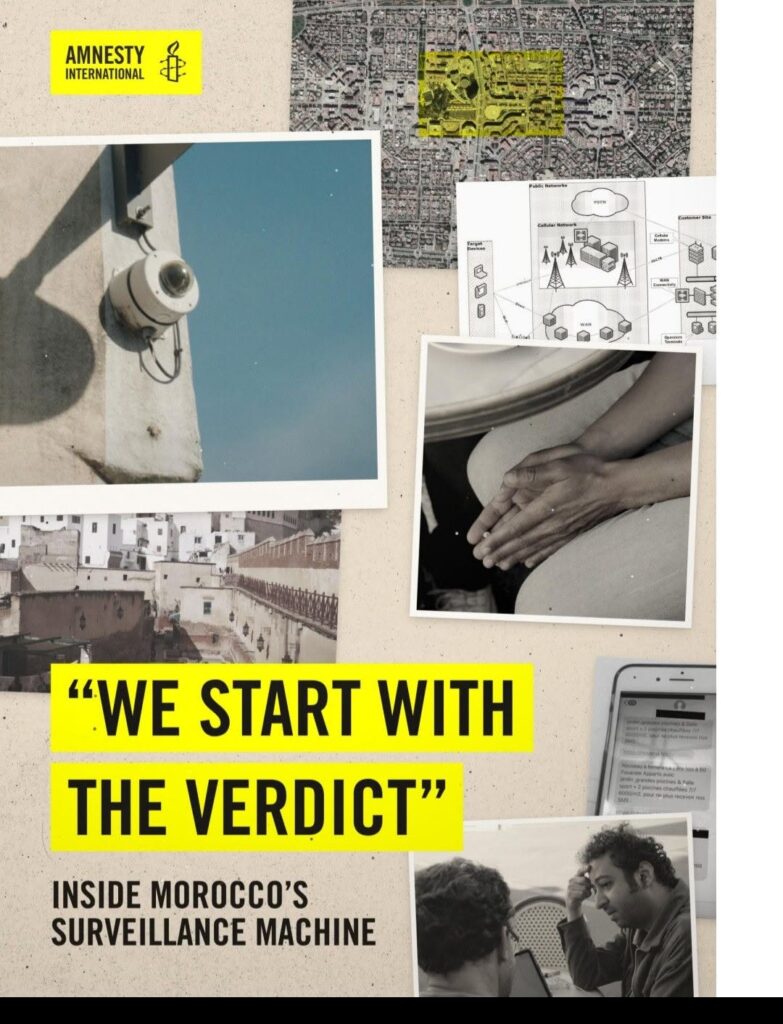
A 2026 Amnesty International report examines allegations of surveillance, harassment, and smear campaigns targeting human rights defenders, journalists, and activists connected to Morocco and Western Sahara, including individuals living abroad.
Sahrawi Activists Among Those Targeted
Sahrawi activists have been particularly affected by restrictions and repression linked to their advocacy for human rights and self-determination in Western Sahara.
These practices have included surveillance, restrictions on freedom of expression and assembly, arrests, and other forms of repression. Some of these activities have extended beyond Morocco and Western Sahara through what Amnesty International describes as transnational repression.
Pegasus Surveillance
A major focus is the alleged use of Pegasus spyware against Sahrawi activists and people connected to Sahrawi human rights work.
Among those identified are Aminatou Haidar, whose device reportedly showed forensic traces of Pegasus infection in 2021, and Oubi Bouchraya Bachir, former Polisario Front representative to the European Union.
Others include Claude Mangin, wife of imprisoned Sahrawi activist Naâma Asfari, and Joseph Breham, the lawyer who represented Asfari before international human rights mechanisms.
Repression Beyond Morocco
Surveillance and harassment have also extended to activists, journalists, lawyers, diplomats, and political figures outside Morocco, particularly in France and Spain. Sahrawi activists were among those targeted outside Morocco beginning in 2018.
The forms of alleged transnational repression include digital surveillance, online harassment, smear campaigns, criminalization, and physical monitoring.
A Case in the United States
The experience of Afaf Bernani, a journalist and human rights defender who moved to the United States in 2022, illustrates the international dimension of these practices.
According to her testimony, the harassment did not end after her relocation. Defamatory allegations and online attacks continued in the United States.
Transnational repression against activists abroad can involve digital surveillance, online harassment, sexualized defamation, and attacks intended to undermine a person’s public reputation.
Impact on Activists and Their Networks
The alleged use of surveillance technologies against Sahrawi activists forms part of a broader pattern affecting individuals inside Western Sahara as well as members of the Sahrawi diaspora abroad.
Human rights defenders, lawyers, family members, journalists and people connected to Sahrawi human rights advocacy have faced surveillance, monitoring, harassment, and smear campaigns.
These practices have had psychological, social, and professional consequences and have contributed to a chilling effect on activism and wider civil society networks.
Individuals identified in connection with surveillance, Pegasus targeting, or transnational repression include Aminatou Haidar, Oubi Bouchraya Bachir, Claude Mangin, Naâma Asfari, Joseph Breham, and Afaf Bernani.